Tell us about the job
Takes about a minute. No obligation.
Before a contractor can give you a straight answer on a water heater repair, they have to work out what has been driving the wear. 176 severe weather events were recorded in Outagamie County, Wisconsin between 2015 and 2024. At that rate, severe weather is a standing condition here, and it puts cumulative stress on components like anode rods, pressure relief valves, and tank seals that age alone would not explain at the same pace. A contractor who skips that assessment risks replacing one part while leaving the actual cause of the failure in place.
Sediment buildup, anode rod condition, and the state of the burner assembly or heating element are what tell a contractor how the repair goes. Half the homes in Outagamie County, Wisconsin were built in 1980 or earlier (2020-2024 ACS 5-year). Housing built that long ago has cycled through equipment more than once, and what runs in it now has had years to accumulate the kind of wear that only shows up when the unit is open. The question a contractor is answering is whether the parts a given model still takes are available, and what the tank itself looks like once they get inside it.
The Parts of a Water Heater a Contractor Checks During Repair
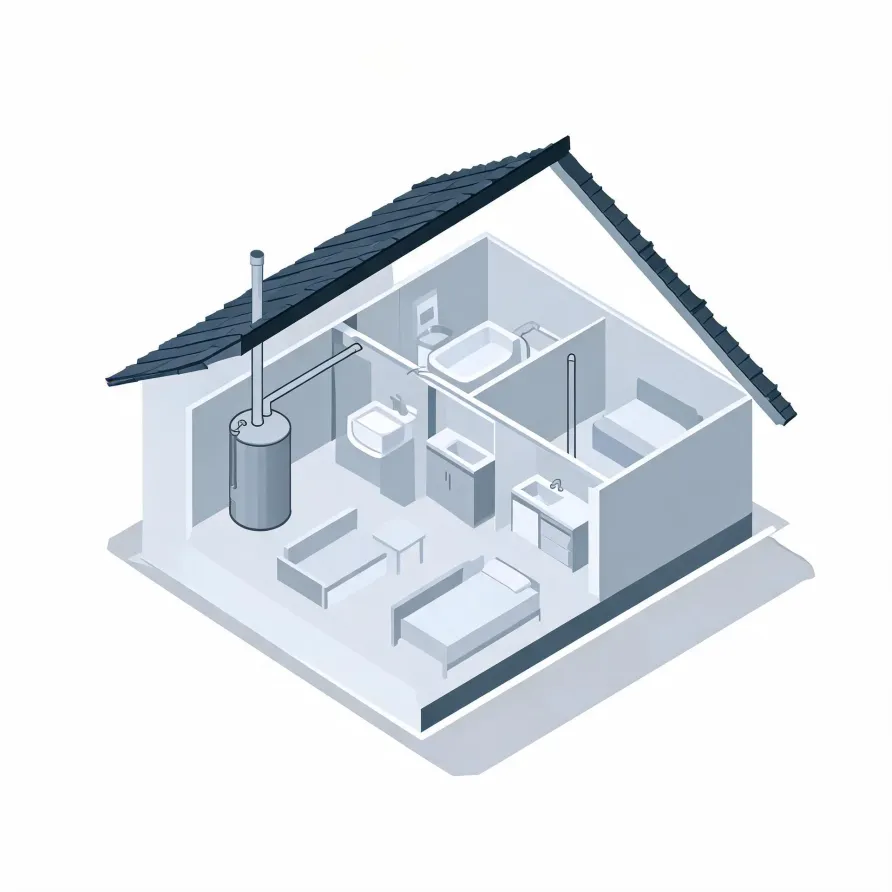
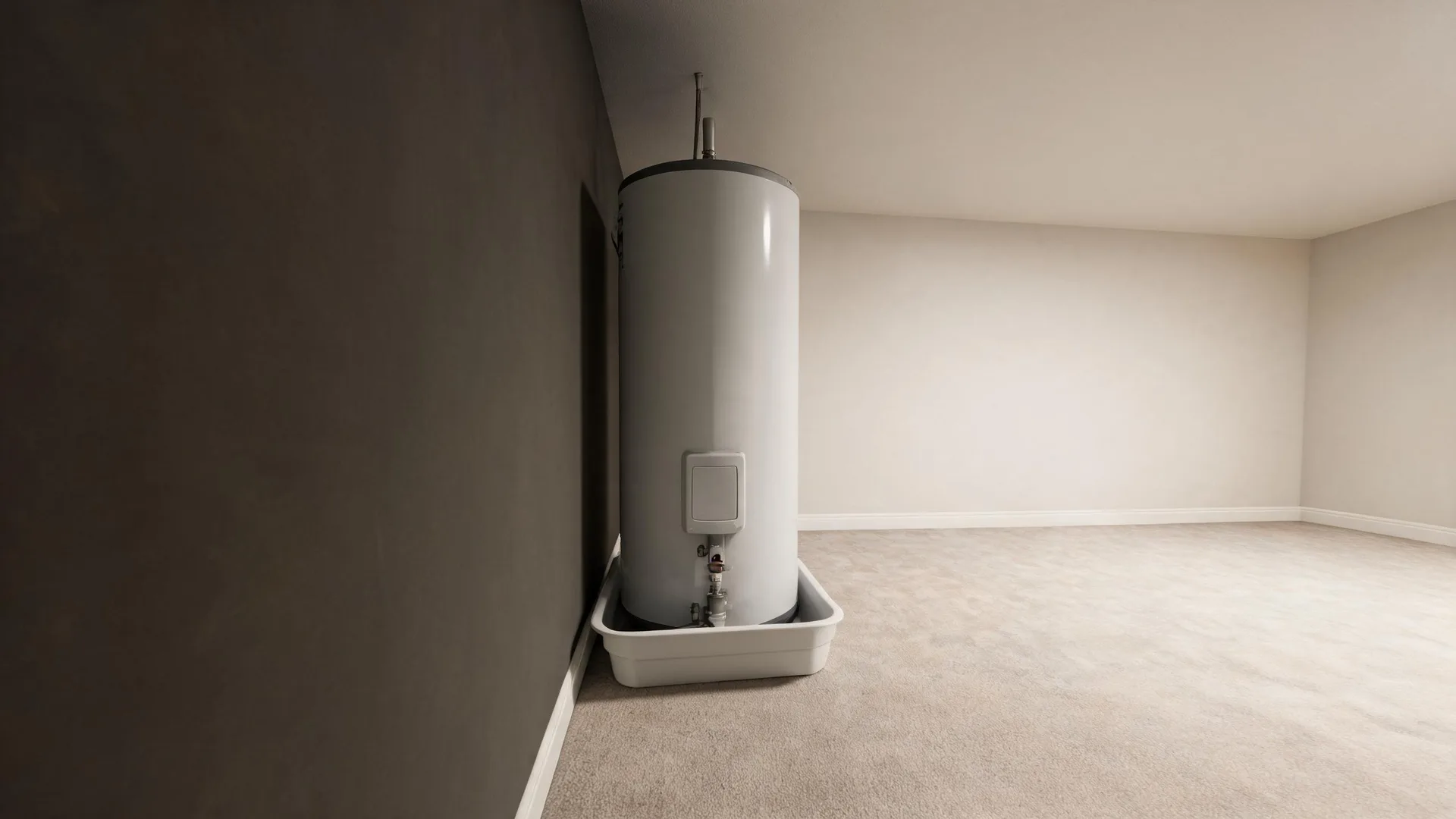
The tank is the piece most homeowners recognize: a tall cylinder that sits in a utility closet, basement, or garage and holds the water supply between draw cycles. When a repair call comes in, the tank itself is one of the first things a contractor looks at, checking for corrosion, leaks at the base, or pressure buildup that the relief valve was meant to prevent.
The burner assembly or heating element sits lower in the unit and is what actually raises the water temperature. The thermostat attached to it controls when heat kicks on and off, and a faulty thermostat is a common reason a household gets water that runs cold or scalding. The anode rod, threaded into the top of the tank, draws corrosion away from the steel interior and is another piece a contractor will pull and inspect.
The drawing shows a typical water heater layout, and a licensed contractor determines which components apply to the specific unit and setup in your home.
Get matched in Outagamie CountyOutagamie County, by the numbers
176 severe weather events were recorded in Outagamie County, Wisconsin between 2015 and 2024.
NOAA National Centers for Environmental Information, Storm Events Database, bulk CSV export, events 2015-01-01 through 2024-12-31.Half the homes in Outagamie County, Wisconsin were built in 1980 or earlier (2020-2024 ACS 5-year).
U.S. Census Bureau, 2020-2024 American Community Survey 5-Year EstimatesOutagamie County, Wisconsin holds 80,915 housing units (2020-2024 ACS 5-year).
U.S. Census Bureau, 2020-2024 American Community Survey 5-Year EstimatesOwners occupy 71.5% of the occupied homes in Outagamie County, Wisconsin (2020-2024 ACS 5-year).
U.S. Census Bureau, 2020-2024 American Community Survey 5-Year EstimatesCodes & Standards Governing Water Heater Repair in Outagamie County, Wisconsin2 sourced rules and standards
Licensing and Legal Requirements in Outagamie County, Wisconsin
A Wisconsin business that employs a certified HVAC qualifier is a certified HVAC business, and no city or county may require it to hold a local certification or licence on top of that.
Wisconsin requires a state HVAC contractor registration: no person or business may install or service heating, ventilating or air conditioning equipment, or offer to, without one.
Severe Weather Events in Outagamie County
Extreme weather puts water heaters under stress: temperature swings, power surges, and flooding all accelerate wear on tanks, elements, and connections. How often that pressure arrives in Outagamie County shapes how much repair work local equipment actually needs.
176 severe weather events, 2015–2024. Source: NOAA National Centers for Environmental Information, Storm Events Database.