Tell us about the job
Takes about a minute. No obligation.
A contractor quoting water heater installation in Marathon County has to treat the local weather record as a working variable, not background noise. 174 severe weather events were recorded in Marathon County, Wisconsin between 2015 and 2024. At that rate, every water heater installed here has been running against conditions that push storage tanks, pressure relief valves, and connecting lines harder than they would be pushed in quieter parts of the country. Sizing a unit for this address means accounting for that load, and the quality of the install matters in the same way, because fittings and connections that might hold fine elsewhere can work loose under repeated stress cycles. A contractor who skips that assessment leaves the homeowner with a system rated for conditions that do not match the house.
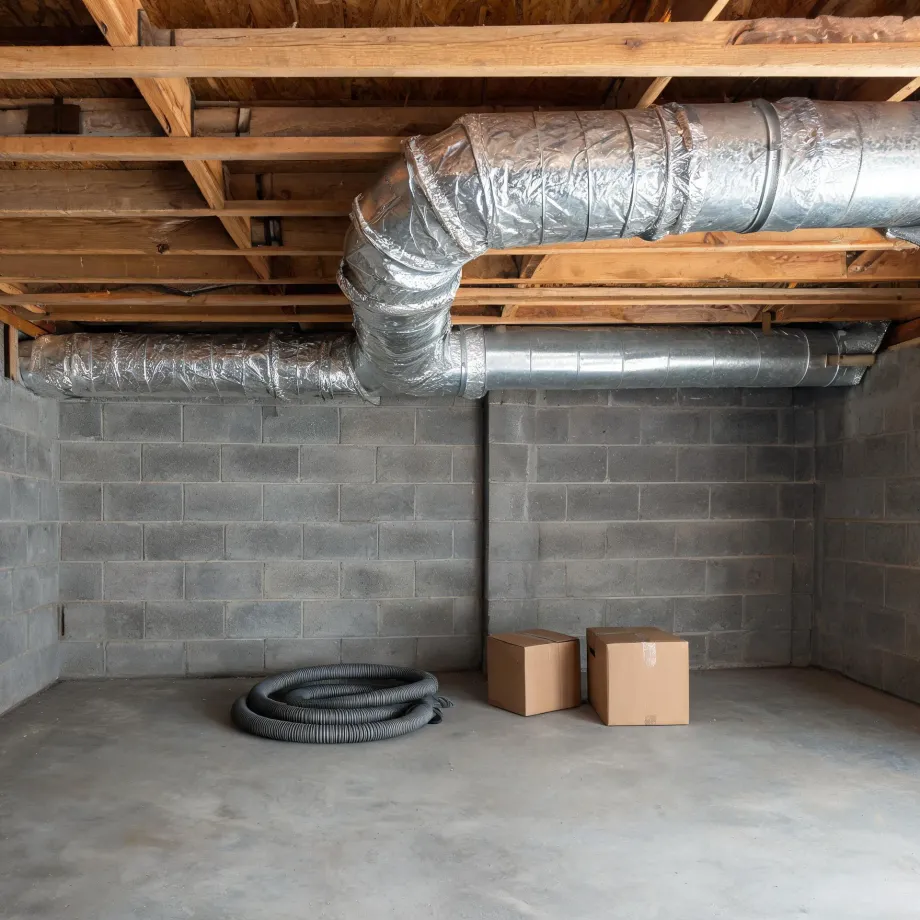
Ductwork sized for an earlier era of water heating does not automatically carry what a replacement unit needs, and in Marathon County that gap is where most installations get complicated. Half the homes in Marathon County, Wisconsin were built in 1978 or earlier (2020-2024 ACS 5-year). A contractor replacing a water heater in a house of that vintage has to establish what the existing supply and venting configuration will actually support before the new unit goes in. If the answer is that it will not, the scope of the job widens before the equipment question is even settled.
What Gets Installed With a New Water Heater
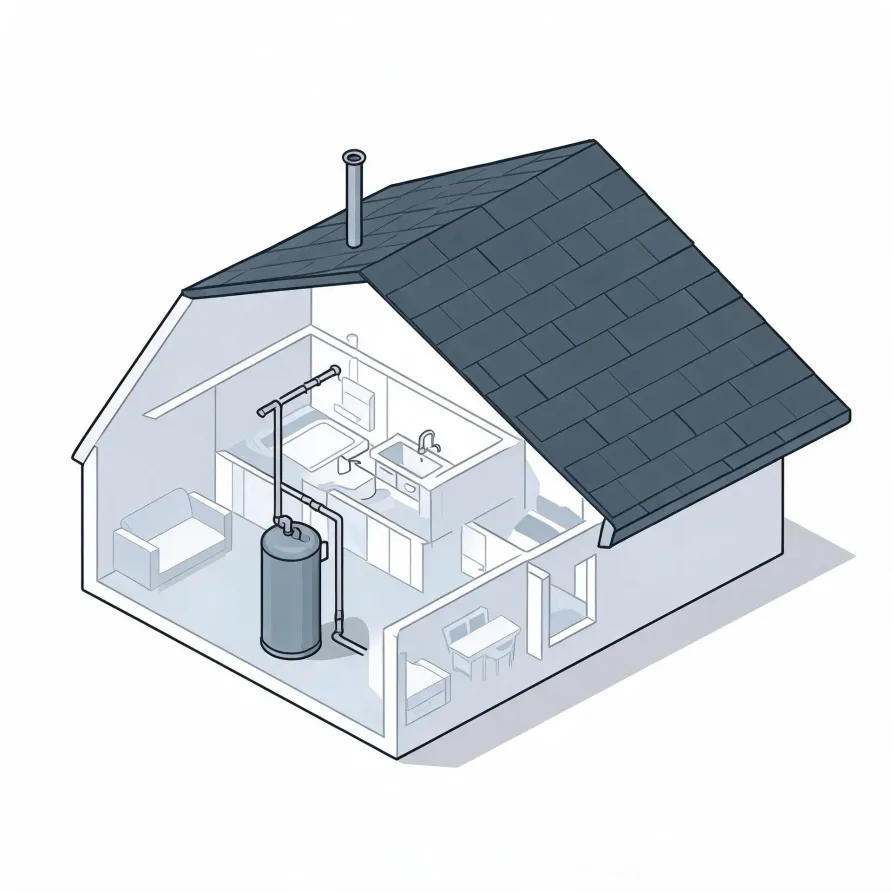
The tank or tankless unit is the center of the installation, sitting in a utility room, basement, or closet depending on the house. A contractor connects it to the cold water supply line coming in and the hot water line going out to every fixture. That connection point is where the work begins.
The pressure relief valve mounts directly on the unit and releases if internal pressure climbs too high. A dedicated shut-off valve goes on the cold supply side so the water heater can be isolated without cutting water to the whole house. The flue or venting pipe runs from the unit to an exterior wall or roof to carry combustion gases out.
The drawing shows a typical layout, and a licensed contractor determines what applies to your specific home.
Get matched in Marathon CountyMarathon County, by the numbers
174 severe weather events were recorded in Marathon County, Wisconsin between 2015 and 2024.
NOAA National Centers for Environmental Information, Storm Events Database, bulk CSV export, events 2015-01-01 through 2024-12-31.Half the homes in Marathon County, Wisconsin were built in 1978 or earlier (2020-2024 ACS 5-year).
U.S. Census Bureau, 2020-2024 American Community Survey 5-Year EstimatesMarathon County, Wisconsin holds 60,910 housing units (2020-2024 ACS 5-year).
U.S. Census Bureau, 2020-2024 American Community Survey 5-Year EstimatesOwners occupy 73.3% of the occupied homes in Marathon County, Wisconsin (2020-2024 ACS 5-year).
U.S. Census Bureau, 2020-2024 American Community Survey 5-Year EstimatesWater Heater Installation Rules for Marathon County, Wisconsin2 codes, standards, and laws
Licensing and Legal Requirements in Marathon County, Wisconsin
A Wisconsin business that employs a certified HVAC qualifier is a certified HVAC business, and no city or county may require it to hold a local certification or licence on top of that.
Wisconsin requires a state HVAC contractor registration: no person or business may install or service heating, ventilating or air conditioning equipment, or offer to, without one.
Severe Weather Events in Marathon County, Year by Year
Water heaters work harder when local conditions push demand up and put mechanical systems under stress. How often that pressure hits Marathon County shapes what a new installation here needs to handle.
174 severe weather events, 2015–2024. Source: NOAA National Centers for Environmental Information, Storm Events Database.